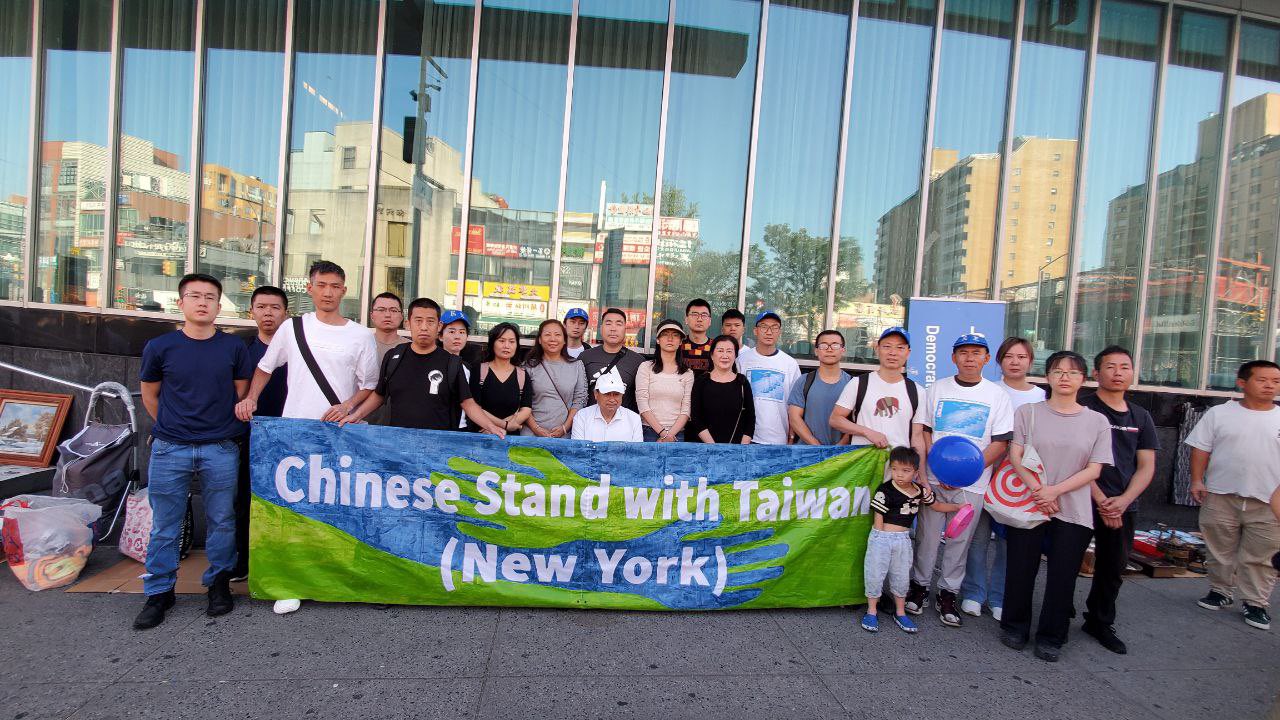
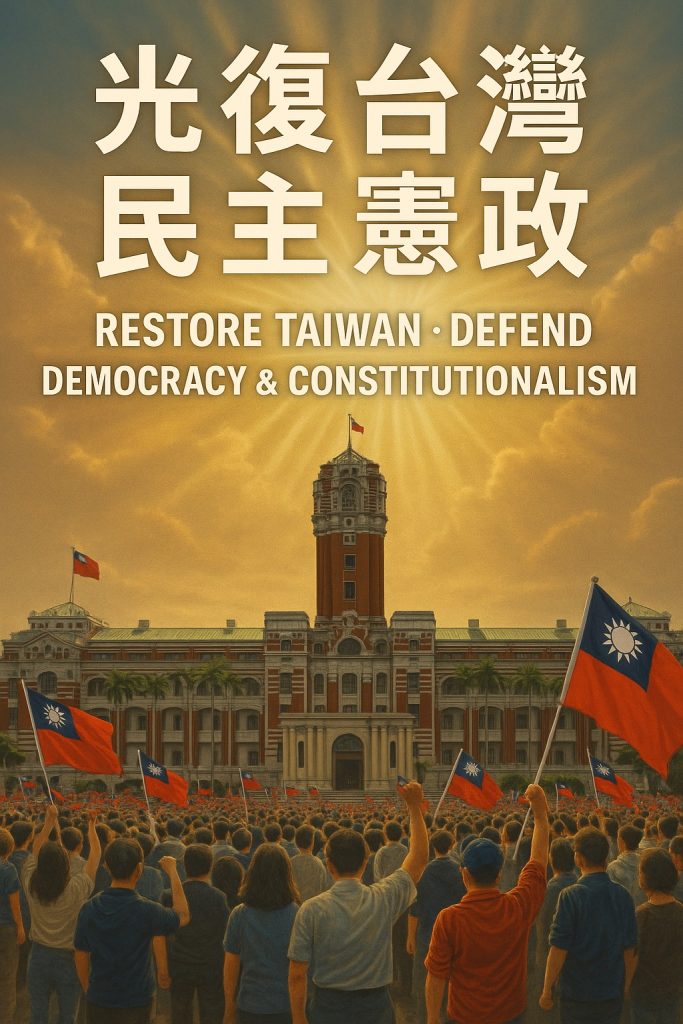
台湾是华人世界最成熟的民主实验场,也是东亚最宝贵的宪政样板。几十年来,台湾通过艰难的转型,逐步摆脱威权统治,建立起多党竞争、新闻自由、司法独立的现代制度。今天,台湾不仅是两千三百万人民的家园,更是全体华语世界的灯塔,照亮了专制阴霾中的希望。面对来自中共的军事威胁、政治渗透与认知战,台湾的民主宪政仍然岌岌可危。守护台湾,意味着守护人类文明的底线。
回顾历史,台湾的民主并非自然而然,而是经历了漫长而艰苦的抗争。从长期的戒严体制到白色恐怖,台湾社会曾被长期的高压统治所笼罩。政治犯在监狱中承受煎熬,新闻言论受到严格审查,整个社会沉浸在“服从”的氛围之中。然而,压迫并未消灭人们对自由的渴望,反而在地下、在民间酝酿了更为强烈的反抗意志。上世纪七十年代之后,民主运动逐渐兴起,无数知识分子、工运人士、学生和普通百姓投身其中,最终推动了 1987 年的解严与宪政改革。台湾人用一代代人的奋斗与牺牲,换来了来之不易的民主成果。2000 年的政党轮替,更是历史性的转折,证明台湾能够在宪政框架内完成和平的权力更替,真正步入了民主常态。
这种制度的核心价值在于,台湾人民不再是权力的附庸,而是国家的主人。言论自由使多元思想得以交流碰撞;民主选举让人民通过手中的选票决定国家的走向;司法独立确保任何权力都必须受到法律的约束;人权保障让少数群体不再被牺牲在多数人的意志之下。这些普世价值是台湾的护国基石,也是抵抗极权的最强武器。因为在一个公民有权批评政府、政党可以和平轮替、法院能够裁决权力滥用的社会里,独裁的种子无法轻易滋长。
然而,台湾的民主并非没有威胁。中共始终将台湾视为必须吞并的目标,其手段不仅是军事上的恫吓,还有政治、经济、外交、文化乃至心理层面的全面渗透。战机与军舰频繁绕台,制造恐惧与紧张;网络上的虚假信息与认知战不断侵蚀台湾社会,企图分化族群、撕裂社群;在国际舞台上,中共极力打压台湾的生存空间,使其在全球体系中被孤立和消音。这些手段揭示了一个根本事实:台湾的存在,本身就是对中共政权合法性的挑战。因为台湾以切实的民主经验证明了一个简单却致命的真理——华人社会完全可以建立自由民主的宪政制度。
也正因如此,光复台湾的意义远远超越岛屿本身。它不仅仅是一场领土的防卫,而是一场价值的捍卫,是一场制度的复兴。对大陆民众而言,台湾就是一面镜子,证明另一条道路的可能性。中共长年散布的“民主不适合中国人”的谎言,在台湾的现实面前不攻自破。台湾的存在,是对极权主义最强有力的驳斥,是对未来中国人最深切的召唤。对全球民主国家而言,台湾则是东亚最前线的防线。如果台湾被极权吞没,那不仅是两千三百万人民的悲剧,更是全世界自由民主秩序的重大挫败。因为台湾一旦失守,极权扩张将更加肆无忌惮,民主的防线将全面后退。
守护台湾,就是守护文明的未来。这种守护不是抽象的,而是具体的、切实的。它要求台湾社会不断自我更新,避免权力再次集中,避免民主形式化和空洞化;它要求公民社会持续成长,让人民的声音真正成为政策的推动力;它要求司法独立和法治精神被坚守到底,不被任何党派利益绑架;它要求台湾的民主不仅是选举的胜利,更是日常生活中对自由、平等与尊严的实际实践。与此同时,这种守护也需要国际社会的支持。民主不是孤立的,极权的威胁也不是局限在一个区域的。今天台湾所面对的,就是全世界民主共同体的共同战役。
因此,光复台湾的民主宪政,不仅是台湾人的任务,也是所有珍视自由与人性尊严之人的责任。这种光复意味着不断深化民主,巩固法治,保障人权,扩大与全球民主国家的合作,共同形成对抗极权的力量网络。它也意味着要为未来的华人世界留下清晰的道路——在台湾的现实经验中,可以看到未来中国可能走向宪政民主的范式。
台湾不是孤岛,而是世界民主地图上最关键的一环。今天,当极权主义仍在扩张,当黑帮逻辑仍在奴役亿万人民时,台湾的存在就是最鲜明的对立面。它告诉人们:即使在华语文化圈,即使在专制的阴影之下,民主与宪政依然可以生根发芽,并且结出丰硕的果实。守护台湾,就是守护这个最珍贵的果实。
光复台湾,意味着不让这片土地被极权玷污,更意味着要让民主宪政成为全体华人的未来方向。这不仅是台湾的希望,更是人类文明的希望。
Restoring Taiwan: The Future of Democratic Constitutionalism
Taiwan stands as the most mature democratic experiment in the Chinese-speaking world and the most valuable constitutional model in East Asia. Over the past decades, Taiwan has undergone a difficult transformation, gradually shaking off authoritarian rule and building a modern system of multiparty competition, press freedom, and judicial independence. Today, Taiwan is not only the homeland of 23 million people, but also a lighthouse for the entire Chinese-speaking community, illuminating hope in the shadows of tyranny. Yet, faced with military threats, political infiltration, and cognitive warfare from the Chinese Communist Party (CCP), Taiwan’s democratic constitutionalism remains fragile. To defend Taiwan is to defend the very foundation of human civilization.
Democracy in Taiwan did not emerge naturally; it was won through long struggle and sacrifice. For decades, the island was suffocated under martial law and the White Terror. Political prisoners languished in jails, free speech was suppressed, and society was forced into conformity. Yet oppression never extinguished the yearning for freedom; it nurtured a stronger will to resist. From the 1970s onward, democratic movements gradually grew, as intellectuals, labor activists, students, and ordinary citizens joined the fight. Their collective sacrifice led to the lifting of martial law in 1987 and paved the way for constitutional reform. The fruits of these struggles were confirmed in 2000, when Taiwan experienced its first peaceful transfer of power through elections. This moment marked a historic turning point, proving that Taiwan could achieve democratic normalcy under a constitutional framework.
At the heart of Taiwan’s system lies the transformation of its people from subjects of power to masters of their own destiny. Freedom of speech enables the free exchange of diverse ideas. Democratic elections give citizens the right to determine the nation’s path through the ballot box. Judicial independence ensures that no power is above the law. Human rights protection guarantees that minorities will not be sacrificed to the will of the majority. These universal values are the bedrock of Taiwan’s democracy, and also the sharpest weapon against authoritarianism. For in a society where governments can be criticized, where ruling parties can be peacefully replaced, and where courts can restrain abuses of authority, dictatorship cannot easily take root.
Yet Taiwan’s democracy is far from free of threats. The CCP has always regarded Taiwan as a territory to be conquered, deploying not only military intimidation but also political, economic, diplomatic, cultural, and psychological warfare. Warplanes and warships circle the island in attempts to sow fear and exhaustion. Online disinformation campaigns and cognitive warfare target Taiwanese society, seeking to divide communities and fracture consensus. In the international arena, Beijing tirelessly suppresses Taiwan’s global presence, striving to isolate and silence it. These strategies reveal a fundamental truth: Taiwan’s very existence undermines the legitimacy of the CCP. By its mere reality, Taiwan proves a simple but devastating truth—that Chinese society is fully capable of building a free, democratic, constitutional system.
For this reason, the restoration of Taiwan is not merely about defending territory, but about safeguarding values and reviving institutions. For the people of mainland China, Taiwan is a mirror, proving that another path is possible. The CCP’s long-propagated lie—that democracy is unsuited to Chinese culture—collapses in the face of Taiwan’s democratic success. Taiwan’s existence is the strongest refutation of authoritarian ideology, and the most profound call to those still trapped under tyranny. For the democratic world, Taiwan is the frontline in East Asia. Should Taiwan fall, it would not only be a tragedy for its 23 million citizens, but also a catastrophic blow to the global democratic order. A Taiwan consumed by authoritarianism would embolden tyranny worldwide and force democracy into retreat.
To defend Taiwan is to defend the future of civilization. Such defense is not abstract but concrete. It requires Taiwanese society to continuously renew itself, to prevent the concentration of power, and to guard against the hollowing-out of democratic institutions. It demands the growth of civil society so that citizens’ voices truly shape policy. It calls for an uncompromising defense of judicial independence and the rule of law, unshackled from partisan manipulation. It insists that democracy is not merely about elections but about the daily practice of freedom, equality, and dignity. At the same time, this defense also requires international solidarity. Democracy cannot survive in isolation, and authoritarian threats do not remain confined to one region. The battle Taiwan faces today is, in essence, the battle of the global democratic community.
Thus, the restoration of Taiwan’s democratic constitutionalism is not only the mission of the Taiwanese people but also the responsibility of all who value freedom and human dignity. Such restoration means deepening democracy, strengthening the rule of law, protecting human rights, and building stronger ties with other democratic nations to form a network of resistance against authoritarianism. It also means leaving a clear pathway for the Chinese-speaking world—Taiwan’s lived experience can serve as a paradigm for the future constitutional democratization of mainland China.
Taiwan is not an isolated island; it is a vital link in the world’s democratic map. Today, as authoritarianism expands and gangster logic enslaves millions, Taiwan stands as its starkest counterpoint. It proclaims that even within the Chinese cultural sphere, even under the shadow of dictatorship, democracy and constitutionalism can take root and flourish. To defend Taiwan is to defend this precious harvest of civilization.
Restoring Taiwan does not only mean preventing this land from being stained by tyranny; it also means making democratic constitutionalism the future course for all Chinese-speaking peoples. It is not merely Taiwan’s hope—it is the hope of human civilization itself.