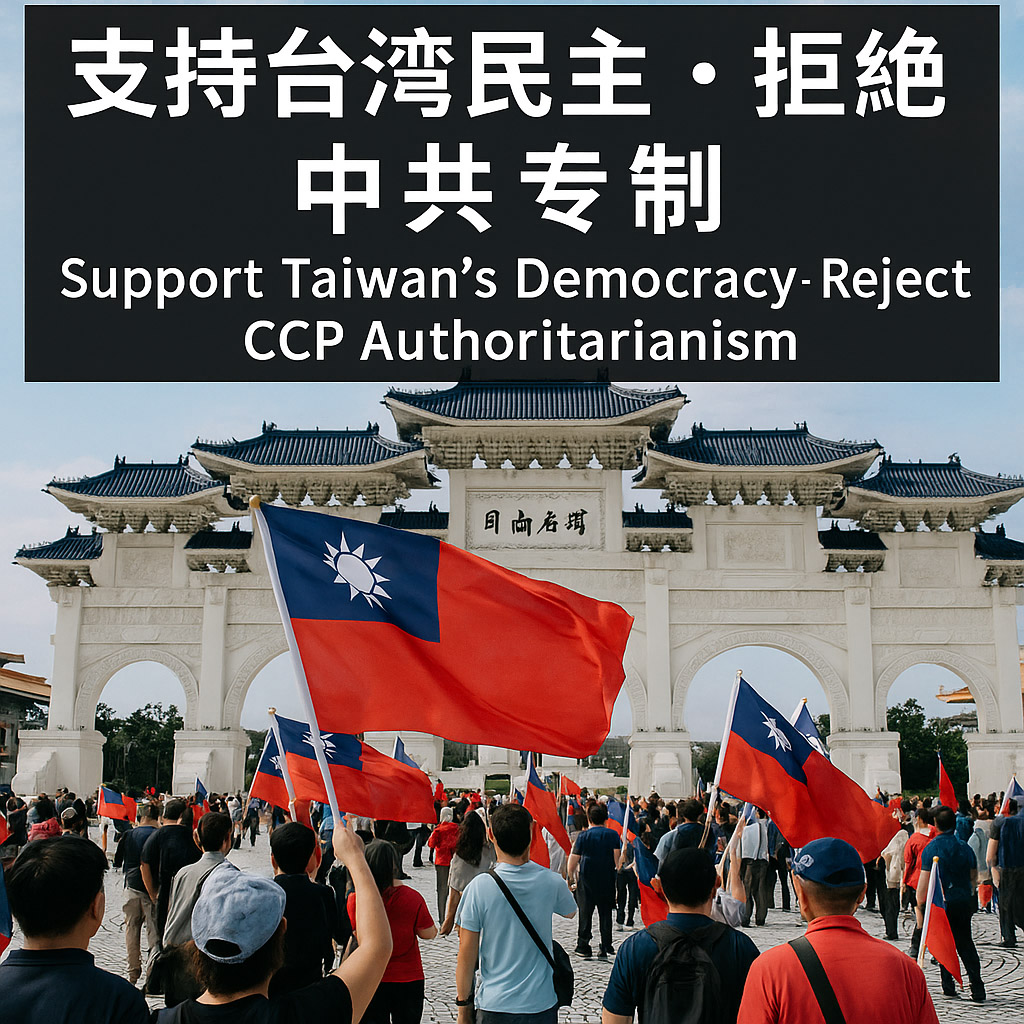
当今世界,台湾与中国大陆构成了鲜明的对比。一个是华人社会中最自由的民主实验场,人民通过选票决定领导人,言论与新闻自由受到保障;另一个则是当代世界最大的专制机器,以谎言、暴力和监控维系统治,把权力集中在少数人手中,剥夺了十四亿人的政治权利。台湾与中共的对峙,并不仅仅是地缘政治的冲突,而是文明与黑暗、自由与专制之间的对抗。
台湾的民主来之不易。从威权统治的阴影到宪政民主的确立,台湾经历了漫长的转型。白色恐怖的监禁与压制,并没有消灭人民对自由的渴望。八十年代的街头运动与社会抗争,最终推开了民主的大门。今天,台湾的总统由全民直选产生,政党之间能够轮替,媒体可以公开监督政府,公民可以走上街头表达不满。这些制度和权利,让台湾成为全球民主体系中最活跃的成员之一。
与此形成对照的,是中共的专制机器。中共一方面高喊“人民至上”,另一方面却将人民彻底排除在政治之外。没有真正的选举,只有事先安排好的“代表”;没有独立的司法,法庭不过是政权的工具;没有自由的新闻,媒体必须“姓党”,成为宣传的喉舌。更令人不安的是,中共在数字技术的加持下,建立起人类历史上最庞大的监控体系,从人脸识别到大数据追踪,从舆论审查到思想管控,几乎要把社会变成一个巨大的“数字牢笼”。
这种对比不仅发生在制度层面,更体现在社会气氛与人心自由上。台湾社会中,人们敢于公开辩论政治问题,敢于批评政府,敢于通过公民行动影响公共政策;而在中国大陆,即使是最普通的表达意见,都可能被视为“寻衅滋事”或“危害国家安全”,轻则被删除账号,重则锒铛入狱。台湾人可以高举写有“民主自由”的横幅走上街头,而在大陆,同样的行动可能会引来警棍与囚禁。
台湾的存在本身,就是对中共谎言的最有力揭穿。几十年来,中共不断宣称“民主不适合中国国情”“西方式制度会导致动荡”,然而台湾的事实证明了恰恰相反:在华人社会里,民主不仅可以运作,而且能够成功地建立稳定与繁荣。台湾经济高度发达,科技创新活跃,社会多元而开放;而中共所统治的大陆,经济虽有体量,但却因腐败与垄断而危机四伏,政治上死气沉沉,社会信任不断崩解。
因此,支持台湾的民主自由,不只是支持一个岛屿的未来,而是支持全人类的共同价值。台湾的民主是对专制最大的挑战,它证明了另一种可能性:华人社会并非只能生活在铁幕之下,也完全能够建设一个自由、公正、有尊严的社会。正因如此,中共才对台湾充满敌意,因为台湾的存在揭穿了它最害怕的事实——极权不是必然,人民可以选择自由。
在全球范围内,台湾与中共的对立早已超越了两岸关系,它关系到世界民主与专制的总体对抗。如果台湾能够坚守民主阵地,它就会成为世界民主共同体的坚强堡垒;如果台湾被极权吞没,那不仅是台湾人的悲剧,更是自由世界的沉重打击。
台湾的未来,不仅属于台湾人民,也属于所有热爱自由的人。支持台湾民主,就是支持自由世界的希望;捍卫台湾宪政,就是守护人类文明的基石。在黑暗与光明的对峙中,台湾代表的是希望、勇气与未来。
Taiwan’s Democracy and the CCP’s Authoritarianism: A Confrontation Between Civilization and Darkness
In today’s world, Taiwan and mainland China form a stark contrast. On one side stands the freest democratic experiment in the Chinese-speaking world, where people choose their leaders through the ballot box and where freedom of speech and of the press are guaranteed. On the other side stands the largest authoritarian machine of our time, sustained by lies, violence, and surveillance, concentrating power in the hands of a few while stripping political rights from 1.4 billion people. The confrontation between Taiwan and the Chinese Communist Party (CCP) is not merely a geopolitical conflict; it is a struggle between civilization and darkness, between freedom and tyranny.
Taiwan’s democracy was not handed down easily—it was won through a long process of struggle and sacrifice. From the shadows of authoritarian rule to the establishment of constitutional democracy, Taiwan endured decades of hardship. The White Terror imprisoned and silenced countless voices, but it did not destroy the people’s yearning for freedom. On the contrary, it nurtured resistance. In the 1980s, street movements and civic protests finally opened the door to democratization. Today, the president is elected by universal suffrage, parties rotate in power, the press openly monitors government, and citizens take to the streets to express dissent. These rights and institutions make Taiwan one of the most vibrant democracies in the global community.
In stark contrast, the CCP rules through a machinery of authoritarianism. It proclaims “the people come first,” yet systematically excludes the people from politics. There are no genuine elections—only pre-arranged “representatives.” There is no independent judiciary—courts function as tools of the regime. There is no free press—media are commanded to “serve the Party” and act as its propaganda organs. More alarmingly, the CCP, empowered by digital technologies, has built the most extensive surveillance system in human history: from facial recognition to big data tracking, from online censorship to thought control, society itself is being transformed into a colossal digital prison.
This contrast is visible not only in institutions but also in the spirit of society. In Taiwan, people can openly debate political issues, criticize leaders, and shape public policy through civic action. In China, even the mildest expression of dissent can be deemed “picking quarrels” or “endangering national security.” At best, accounts are deleted; at worst, individuals are imprisoned. In Taiwan, citizens proudly raise banners proclaiming “freedom and democracy.” In China, the same act would likely be met with batons and handcuffs.
Taiwan’s existence itself exposes the CCP’s lies. For decades, Beijing has insisted that “democracy is not suitable for Chinese society” and that “Western-style systems lead to chaos.” Yet Taiwan proves the opposite: in a Chinese-speaking society, democracy not only functions but brings stability and prosperity. Taiwan’s economy is highly developed, its technological innovation dynamic, and its society diverse and open. Meanwhile, in mainland China, though the economy is vast, it is plagued by corruption and monopolization, political life is stagnant, and social trust is collapsing.
Supporting Taiwan’s democracy and freedom therefore means more than backing the future of one island; it means affirming universal human values. Taiwan’s democracy poses the greatest challenge to authoritarianism—it demonstrates that Chinese societies are not doomed to dictatorship, that they too can build a free, just, and dignified order. This is precisely why the CCP is so hostile toward Taiwan: because Taiwan’s very existence exposes the truth it fears most—that tyranny is not inevitable, and that people can choose freedom.
Globally, the confrontation between Taiwan and the CCP extends far beyond cross-strait relations; it is part of the larger struggle between democracy and authoritarianism. If Taiwan holds firm, it will stand as a fortress for the free world. If Taiwan falls, it will be a tragedy not only for 23 million people but for freedom everywhere—a devastating blow to democracy worldwide.
The future of Taiwan belongs not only to its own citizens but to all who cherish liberty. To support Taiwan’s democracy is to support the hope of the free world. To defend Taiwan’s constitutional order is to safeguard the foundation of human civilization. In this confrontation between darkness and light, Taiwan represents hope, courage, and the future.