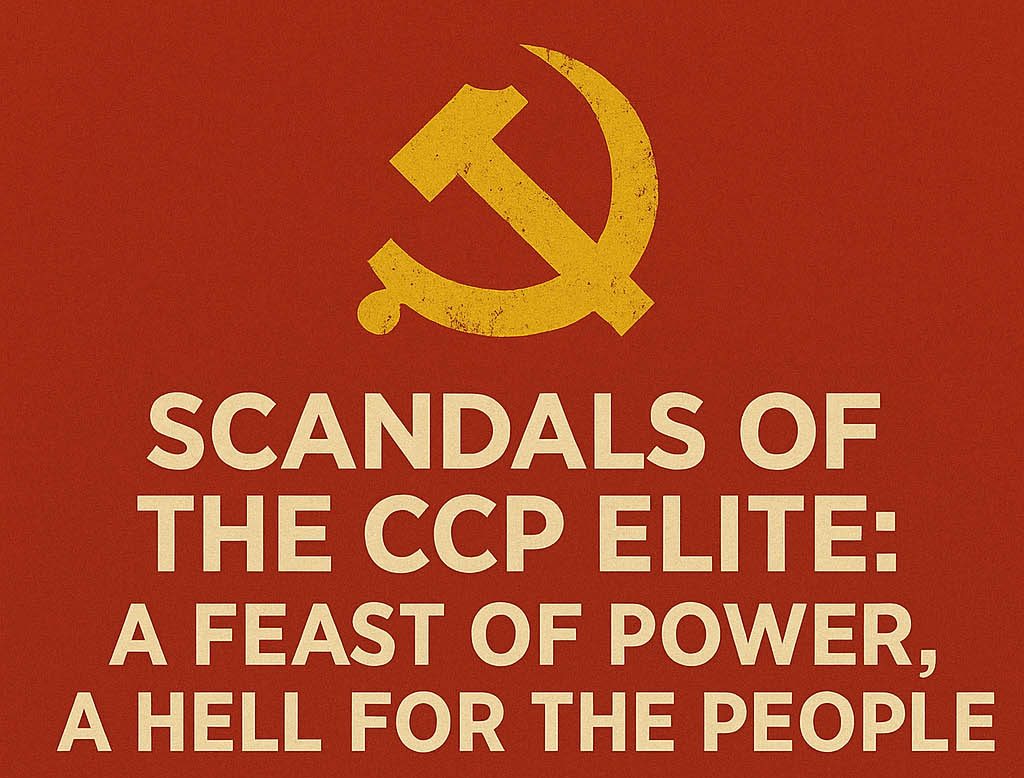
中共最擅长喊口号:为人民服务、廉洁奉公、反腐到底。可现实呢?它的高层舞台从来都是一场血腥的宫廷剧。谁握住刀把子,谁就能笑到最后。所谓“集体领导”“制度保障”,只是掩人耳目的道具,一旦最高权力者开口,制度立刻跪下。真正的中国政治,不是法治,而是丛林;不是人民意志,而是派系内斗。
红色家族的财富神话,是高层丑闻最鲜明的注脚。他们在国内操控央企国企,享受垄断红利;他们在海外疯狂买楼,用空壳公司转移资产;他们在人前依旧披着“无产阶级先锋队”的外衣。所谓“红色江山”,早已异化为“红色家族企业”。财富不是通过勤劳与创造积累的,而是权力印钞机源源不断的馈赠。百姓拼死拼活还不上房贷,他们却轻而易举买下整片街区。
反腐运动表面声势浩大,实质却是高层的一场权力换班戏。每隔几年,就会有几位高官被推上审判台,演一出伏法认罪的戏码,博得掌声。可腐败从未消失,只是换了一批人继续把持。所谓反腐,不是为了清理,而是为了清洗;不是为了干净,而是为了更稳固。丑闻从来不是被解决,而是被利用。
真正的丑闻,不只是那些被曝光的数字和账本,而是与普通人的生活形成的残酷对比。权贵子女出国留学、开豪车、住别墅,普通百姓却背着沉重房贷、为医疗破产、为孩子的高考拼尽一生。所谓“共同富裕”,最后成了“穷的更穷,富的更富”的赤裸现实。而那“富”的一方,恰恰就是打着红旗的特权阶层。
中共高层丑闻从来不是偶然,不是谁一时贪心,而是制度必然。一长专制让个人意志大过一切,一党独裁让监督和制衡彻底消失,红色血统让腐败从一代延续到下一代。每一次曝光的丑闻只是冰山一角,而整个冰山本身,就是中共体制。
这样的政权,可以制造恐惧,可以掩盖真相,可以用宣传和口号欺骗一时,但无法掩盖腐败的根,也无法遮住历史的眼睛。真正的丑闻,就是他们至今还在用“人民”两个字装点门面。
Scandals of the CCP Elite: A Feast of Power, A Hell for the People
The CCP never tires of shouting slogans: “Serve the people,” “Stay clean and incorruptible,” “Fight corruption to the end.” But the reality? Its top stage has always been a bloody palace drama. Whoever holds the knife wins in the end. The so-called “collective leadership” and “institutional safeguards” are nothing but props for show. Once the supreme leader speaks, the system kneels instantly. Real Chinese politics is not the rule of law but a jungle; not the will of the people, but endless factional struggles.
The myth of red family wealth is the clearest footnote to these scandals. At home, they manipulate state-owned enterprises, pocketing monopoly profits. Abroad, they snap up properties and funnel money through shell companies. In public, they still wear the cloak of the “vanguard of the proletariat.” The so-called “red regime” has long since mutated into a red family business. Wealth is not earned through labor or creativity, but flows endlessly from the money-printing machine of power. Ordinary people toil all their lives and still cannot pay off a mortgage, while these elites casually buy entire blocks overseas.
The much-trumpeted anti-corruption campaigns are in truth nothing more than power reshuffles. Every few years, a handful of officials are paraded to the courtroom to perform their “confessions,” winning applause. But corruption never disappears—only a new batch of officials steps in to continue it. In the CCP’s vocabulary, anti-corruption does not mean cleaning up; it means cleansing enemies. It is not about honesty; it is about consolidating control. Scandals are never solved, only exploited.
The real scandal is not just in the numbers exposed in hidden ledgers, but in the brutal contrast with the lives of ordinary people. The children of the elite study abroad, drive luxury cars, and live in villas, while ordinary citizens are crushed by mortgages, bankrupted by medical bills, and sacrifice everything for their children’s college entrance exams. The slogan of “common prosperity” has collapsed into a naked reality: the poor get poorer, the rich get richer. And the “rich” are precisely those who wave the red flag.
Scandals at the top of the CCP are never accidents, never just the greed of a few individuals—they are the inevitable product of the system. One-man autocracy puts personal will above everything. One-party dictatorship erases supervision and checks. Red lineage passes corruption from one generation to the next. Every scandal that surfaces is only the tip of the iceberg, while the iceberg itself is the CCP system.
Such a regime can manufacture fear, can cover up the truth, can deceive with propaganda and slogans for a while—but it cannot erase the roots of corruption, nor can it blind the eyes of history. The greatest scandal of all is that they still dare to dress themselves in the word “People.”